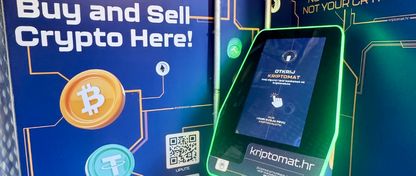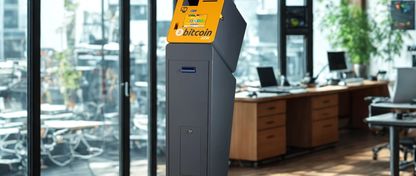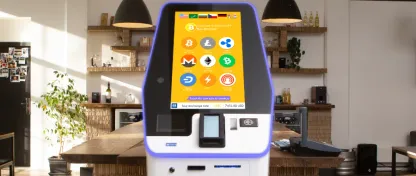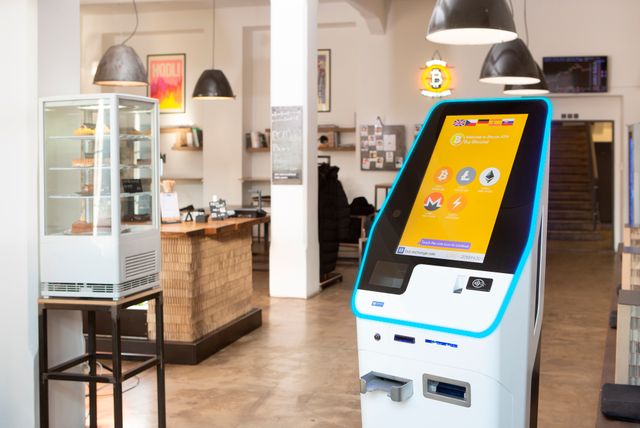
If the money is already in a bank account, the way into digital assets is an app. If the money is cash in a pocket, the way in is a place. That distinction, and not the technology, is what a crypto ATM business is built on.
|
52%
Of payments
At euro area points of sale were made in cash in 2024, down from 59% in 2022
|
62%
And rising
Of euro area consumers say it is important that cash stays available, up from 60%
|
19m
US households
Have a bank account but still use services outside the banking system
|
An app can only move money that is already digital
Anyone with a bank account, a card and identity documents can buy digital assets on a phone in a few minutes. That is not in dispute, and it is not the market a crypto ATM serves.
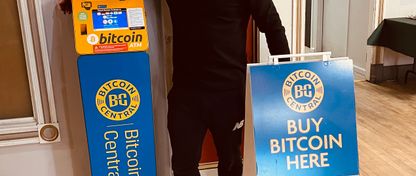
Software can only move value that already exists in digital form. It cannot accept a banknote. For a customer whose money is physical, there has to be a point where cash becomes a balance, and that point exists in the physical world or it does not exist at all. Bank branches do it. Some retailers do it. A crypto ATM does it in one step, and converts in both directions.
So the relevant question for an operator is not how many people hold digital assets. It is how many people still hold cash.
Cash did not quietly disappear
The European Central Bank found cash used for 52% of euro area payments at the point of sale in 2024, down from 59% two years earlier.¹ The direction is clear, and the remaining share is still half of all transactions at the till.
The same study found the proportion of consumers who say it is important to have cash as an option rose to 62%, from 60%.¹ People reach for it less often and want it available more. For an operator that combination matters more than the headline decline, because a machine does not need cash to dominate. It needs cash to persist.
Having a bank account is not the same as being served by one
Financial exclusion is usually described in terms of the developing world, and at that scale it is enormous: 1.3 billion adults still lack access to financial services, and around 900 million of them already own a mobile phone.³ That is a long horizon rather than a near-term market, because machines follow regulation, electricity and footfall, and those arrive unevenly.
The nearer opportunity sits inside wealthy economies. In the United States, 4.2% of households, about 5.6 million, had no bank account at all in 2023. A further 14.2%, about 19 million households, held an account and still used financial services outside the banking system.² These are people with documents and an address who, for reasons of cost, trust or convenience, transact in cash. They are not a development statistic. They are a customer base in a market where crypto ATMs already operate legally.
What a machine does, and what it does not
It is worth being precise, because the misunderstanding is common and it is the first thing a regulator will test.
|
It converts cash in both directions
A customer puts in notes and receives digital assets, or sells assets and takes out notes. That is the function, and it is the one function no application performs on its own.
|
It identifies the customer
Operators are regulated businesses. Depending on the jurisdiction and the amount, customers are identified before they transact, and transactions are recorded and reported. A machine is not a way around that and was never designed to be.
|
|
It is faster than the alternative
The conversion settles in minutes at a location the customer already passes, without opening an account or waiting on a transfer.
|
It is not a replacement for a bank
Someone with a bank account, a card and a working app has little reason to use one. The customer is the person holding cash, by circumstance or by choice.
|
Why the model works as a business
What makes crypto ATMs commercially interesting is not the technology. It is the shape of the operation.
|
A small footprint in someone else's building
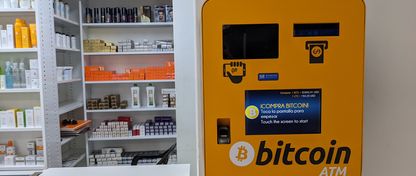
An operator is not opening a branch. A unit occupies roughly the floor space of a vending machine inside a shop, a petrol station or a mall, under a revenue arrangement with a host who benefits from the extra visits.
|
Revenue per transaction, not per sale
Each machine earns on throughput rather than on a one-off purchase. A site that performs keeps performing, and a site that does not can be relocated rather than written off.
|
|
Headcount does not scale with units
Monitoring, configuration, limits, rates, identification and reporting run from one browser-based console. Adding the eleventh machine does not mean adding the eleventh person.
|
Two sides of the same flow
Machines that both buy and sell serve customers coming in either direction, which spreads demand across market conditions instead of depending on one of them.
|
What to check before the hardware
Markets differ more than machines do. The first question is not which model to buy, it is what the jurisdiction asks of an operator: whether registration or a licence applies, at what value a customer must be identified, what has to be reported and to whom, and whether the activity is permitted at all. Those requirements vary widely between neighbouring countries and they shape the cost of operating long before the hardware does.⁵
The second question is the location. A unit depends on footfall, on a host willing to keep it visible, and on a local population that still handles cash. Site selection is at least as consequential as the specification of the machine standing on it.
|
About the publisher
What GENERAL BYTES provides
GENERAL BYTES has built crypto ATMs since 2013. More than 11,700 machines are currently in operation with our customers in over 60 countries.⁴ For operators, the offering covers three things beyond the hardware itself.
|
|
Thinking about it
Tell us the market, and we will tell you what it takes.
Whether it is a first installation or an expansion, start with a conversation about the country, the locations and the rules that apply there, including the markets where we would tell you to wait.
|
Sources and references:
1. ECB — Digital payments continue to rise, albeit at a slower pace; cash remains a key payment method (press release, 19 December 2024, on the SPACE 2024 study of consumer payment attitudes in the euro area), 2. FDIC — Survey Finds 96 Percent of U.S. Households Were Banked in 2023 (press release, 12 November 2024, on the 2023 National Survey of Unbanked and Underbanked Households), 3. World Bank — Mobile phone technology powers saving surge in developing economies (press release, 16 July 2025, on the Global Findex 2025 database), 4. GENERAL BYTES — About us (machines in operation and countries served), 5. GENERAL BYTES — Regulatory Hub (crypto ATM regulation, country by country)
Disclaimer: This article is for general informational purposes and is not legal, compliance, tax or investment advice, and it makes no representation about the profitability of any operation. Market figures are attributed to the sources cited. Whether a crypto ATM may be operated, and on what terms, depends on the jurisdiction, the operator and the configuration. Confirm the current position with qualified advisers before acting.